
Why a Retaining Wall in Tappahannock or Williamsburg, VA, Is Often the First Step in a Full Backyard Transformation
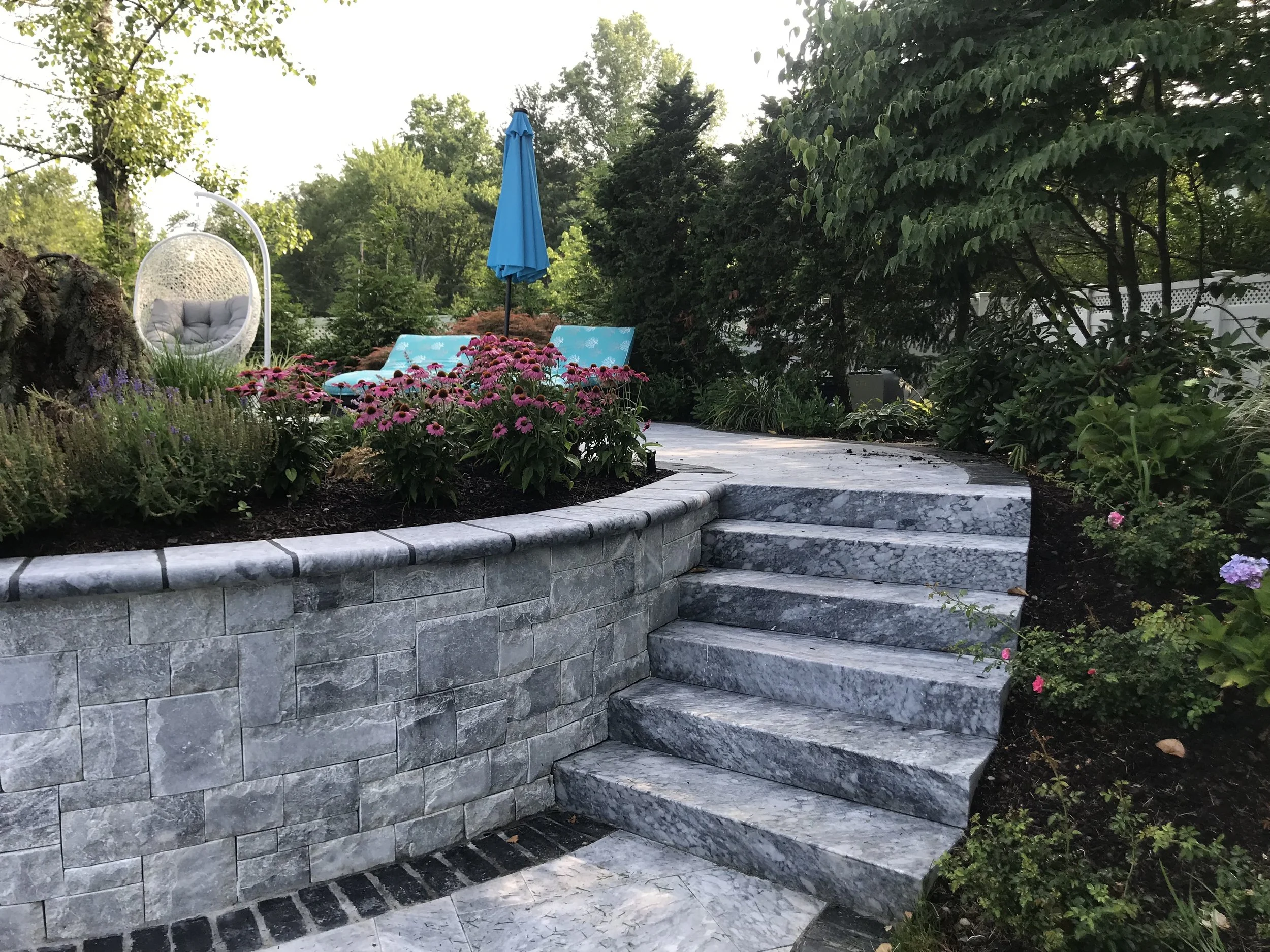
Most backyard transformations in Central and Coastal Virginia start with a vision: a pool, an outdoor kitchen, a patio where the family gathers on summer evenings. But on properties where the grade works against that vision, the transformation cannot begin with any of those features. It has to begin with the land itself.
A retaining wall is what makes everything else possible on a sloped or uneven property. It holds the grade, creates the level surface that a patio or pool surround requires, and gives the rest of the design somewhere to anchor.
For homeowners in Tappahannock and Williamsburg, VA, where elevation changes, waterfront terrain, and variable soil conditions are common, a retaining wall is often not just the first step in a backyard transformation. It’s the step that determines what the rest of the project gets to be.
Related: Strength, Structure, and Style: The Lasting Value of a Professionally Built Retaining Wall
What a Sloped Property Looks Like Without One
A yard that drops away from the house has real limitations. The grade that looks like character from the back door creates dead space that cannot be used, seating that tilts, patio edges that erode after heavy rain, and drainage patterns that work against the lawn and plantings year after year.
Outdoor kitchens and fire features need level ground. Pools need excavation that respects the surrounding grade. Even a simple patio furniture arrangement requires a surface that does not slope.
Homeowners in Virginia's coastal and river communities often live with these limitations for years before realizing that a single structural intervention resolves most of them at once.
A well-designed retaining wall creates usable square footage, redirects drainage, and establishes the foundation for everything the homeowner actually wants to build.
How HomeTurf Approaches Retaining Walls as Part of a Larger Design
At HomeTurf Landscapes, a retaining wall is never treated as a standalone fix. Our team approaches it through the same design-first process used for every outdoor living project.
We start with site analysis, understanding the grade change, the soil conditions, and how water moves across the property, then developing a plan that integrates the wall into the full landscape vision rather than adding it as an afterthought.
That integration matters because the decisions made during retaining wall construction shape everything downstream. The height and placement of the wall determine how much level surface gets created. The cap detail and material selection affect how the wall reads against the patio, pool deck, or planting beds that follow.
The drainage system installed behind the wall influences how the entire yard performs through Virginia's wet seasons. Getting these decisions right at the beginning produces a finished backyard that feels planned from the ground up, because it was.
Virginia's Terrain Requires Structural Honesty
Central and Coastal Virginia presents specific conditions that affect how retaining walls get built. Clay-heavy soils in the James River corridor expand and contract seasonally, putting lateral pressure on wall structures that are not engineered for it.
Waterfront properties in the Tappahannock area deal with high moisture content, storm surge considerations, and soil that behaves differently than inland sites. Properties throughout the Williamsburg area encounter the varied terrain of a region shaped by rivers, inlets, and natural elevation changes.
HomeTurf's team designs retaining walls with those conditions accounted for from the start. Proper base preparation, compacted aggregate backfill, and drainage pipe installation behind the wall are the baseline that keeps a Virginia retaining wall performing for decades rather than shifting within the first few winters.
The Transformation Starts With the Grade
Homeowners who come to HomeTurf with a vision for their backyard like the pool, the patio, the outdoor kitchen, the pavilion sometimes don't realize how much of that vision depends on solving the grade first.
Once the retaining wall is in and the level surface is established, the rest of the project moves with clarity and confidence. The design team knows exactly what they are working with. The construction crew knows what comes next. And the homeowner starts to see, for the first time, what the property has been capable of all along.
Contact HomeTurf Landscapes to start planning your backyard transformation in Tappahannock or Williamsburg, VA.
Related: 6 Ways a Retaining Wall in James City County & Williamsburg, VA, Enhances Your Backyard
About the Author
Founded by Robbie Shackelford in 2003, HomeTurf Landscapes is a full-service landscape design, construction, and pool installation company based in Williamsburg and Tappahannock, VA. With over 80 years of combined experience and a team of 25+ professionals, HomeTurf creates custom outdoor living spaces including fiberglass pools, patios, outdoor kitchens, and commercial landscapes across central and coastal Virginia.