
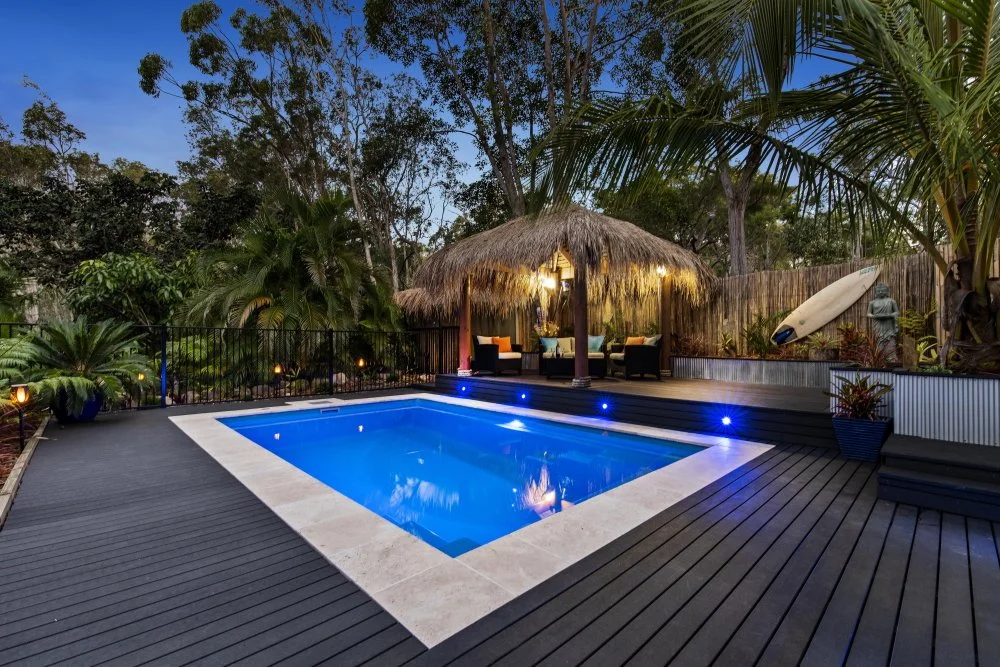
Evening is when a landscape shows what it is worth, and also when a poorly installed system gives itself away. Homeowners searching for a landscape lighting contractor in Williamsburg, VA start with photographs, then find that two companies quoting the same backyard are selling two different things.
One is selling a designed system with a drawing, a warranty and a service relationship. The other is selling a box of fixtures and an afternoon of labor.
HomeTurf Landscapes has been in business for more than 20 years, and every outdoor lighting system we install carries a 1-year workmanship warranty. That second detail matters more than homeowners expect, because low-voltage wiring, transformers and fixture seals are where a rushed installation fails first.
What follows is what to ask for, what to read in a proposal, and how to tell a lighting contractor from a crew with a van full of stake lights.
Related: Why Landscape Lighting Services Should Start With a Nighttime Site Walk in Williamsburg, VA
What Separates A Landscape Lighting Contractor From A Crew That Installs Fixtures?
The difference shows up before any equipment arrives. A contractor starts with your property and the way your family moves through the yard after sunset, then produces a plan. An installer starts with a fixture count. Our outdoor lighting design and installation begins with walking the property after dark, so the layout answers to the house rather than to a price sheet.
An after-dark walk shows things a daytime visit cannot. It shows how much light already reaches the property from the street and the neighbors, which windows the yard is viewed from in the evening, and where people actually travel between the driveway, the door and the back terrace. Those three observations move fixtures more than any catalog does.
A fixture count produces a predictable result. Path lights land at even spacing regardless of what the walk needs, uplights sit tight against trunks because that is the fastest place to drive a stake, and the yard ends up bright in the places nobody looks and dark in the places people use.
What Credentials And Insurance Should You Ask A Lighting Contractor To Show?
Ask for a Virginia contractor license number, general liability coverage and workers compensation, and ask to see the certificates rather than accept a verbal assurance. Low-voltage lighting still involves trenching, transformer mounting and a tie-in to household power, so an uninsured crew becomes your exposure.
Employment status is the follow-up question. Ask how long the company has held its license, and ask if the people on site are employed or subcontracted, because a subcontracted crew that leaves the area takes the practical warranty with them even when the paperwork says otherwise. A contractor who answers those three in writing has told you a great deal.
Certificates are worth a short check rather than a glance. Confirm the dates are current, confirm the name on the certificate matches the company on the proposal, and look the license number up through Virginia's Department of Professional and Occupational Regulation. Each of those takes a few minutes and settles the question.
What Belongs On The Lighting Plan Before Anyone Digs?
A plan should show fixture locations on a drawing of your property, transformer placement, wire runs, and the zones each circuit controls. It should name the manufacturer and model of every fixture, not a generic description. If a company cannot produce a drawing, there is nothing to hold them to later.
Model numbers are what make two proposals comparable. A brass well light with a replaceable lamp and a lifetime housing warranty sits in a different category from a painted aluminum unit with an integrated LED, and both can be described on paper as an uplight. The model number is where the difference becomes visible.
We show clients 2D or 3D renderings so the intent is visible before a shovel goes in the ground. The drawing keeps working after the install too, since it records where wire runs and which zone feeds which fixture, which is what any future service call starts from.
Related: Landscape Design in Williamsburg, VA, That Feels Planned and Complete
What Should A Written Lighting Scope Include?
The scope is where a proposal turns into a commitment. It should state fixture counts by type, transformer size, wire gauge and burial depth, zone counts, timers or dimmers, and what the crew will restore after trenching through turf and beds.
It should also state what is excluded, because unstated exclusions are how a project quietly grows after signing. Read the exclusions first. The common ones are an exterior outlet or electrical tie-in treated as somebody else's work, sod and bed repair left as the homeowner's problem, and controls priced separately after the fixture count has already set your expectations.
Change handling belongs in the document as well. Yards produce surprises, from a root mass where a run was drawn to a fixture the homeowner wants moved once the system is aimed, and a scope that says how changes get documented and approved keeps those conversations short.
Who Comes Back When A Fixture Stops Working?
Lamps fail, lenses fog, and roots shift a fixture out of aim over a few seasons. Ask who returns for that work, how quickly, and what the workmanship warranty covers as distinct from the manufacturer warranty on the fixture. A company that installs and then disappears leaves you calling a manufacturer with a serial number in hand.
Ongoing service has a shape worth asking about. A yearly visit that cleans lenses, checks connections at the transformer, tests voltage at the end of each run and re-aims fixtures that plantings have grown past keeps a system looking like it did at handover, and it catches a failing connection before it takes a zone down.
Parts matter over a longer horizon. Fixture lines get discontinued, so a contractor who can tell you what happens in year eight when your model is no longer made has thought further ahead than one who has not. Our clients in Williamsburg and Tappahannock deal with the same team that built the system.
How Do You Compare Two Lighting Proposals Fairly?
Line the two documents up and read fixture counts, models, zone counts and warranty terms side by side. A smaller number attached to fewer fixtures, an undersized transformer or a shorter warranty is not the same offer.
The cleanest method is to normalize the comparison. Ask each company to price the identical plan, with the same fixture models, the same zone count and the same transformer capacity, and the difference between the two documents becomes the thing you actually wanted to know.
Where a proposal comes in well under the others, the gap is usually visible in the specification rather than hidden in it. Fewer zones, a transformer loaded to its limit, lighter conductors on long runs, or a warranty measured in months are all legible once the documents sit next to each other.
Homeowners who have seen our landscape design work across Williamsburg ask about the drawing before the figure, and that is the right order.
Book A Lighting Consultation And Ask For A Written Proposal
If you are comparing proposals, ask each company for a drawing, a written scope and a warranty inside the same document.
Our team will walk your property, show you a plan, and hand you a written proposal you can hold us to, the same way we handle larger design and build projects.
Call or send a note to schedule a consultation for landscape lighting design and installation in Williamsburg or Tappahannock. HomeTurf Landscapes will bring the drawing.
In Summary
What does the workmanship warranty on a HomeTurf Landscapes lighting installation cover?
HomeTurf Landscapes carries a 1-year workmanship warranty on outdoor lighting installations, which covers the installation itself: wiring connections, transformer mounting, and fixture aiming. Fixtures and lamps also carry their own manufacturer warranties, which run separately and for different terms. Ask for both in writing.
Who owns the lighting system after the install is finished in Williamsburg, VA?
Ownership sits with the homeowner. The transformer, fixtures, wire and controls become part of your property once the project is paid for, and the plan drawing is yours. Keep that drawing, because the next person who services the system will want to know where the wire runs.
How far do you travel from Williamsburg and Tappahannock for landscape lighting work?
We run crews out of Williamsburg and Tappahannock, VA and serve the surrounding Central and Coastal Virginia communities, including Poquoson, Hampton, James City County and New Kent County. Ask which office would handle your property when you call.
Related: Common Landscape Design Challenges in Williamsburg, VA—and How They’re Solved